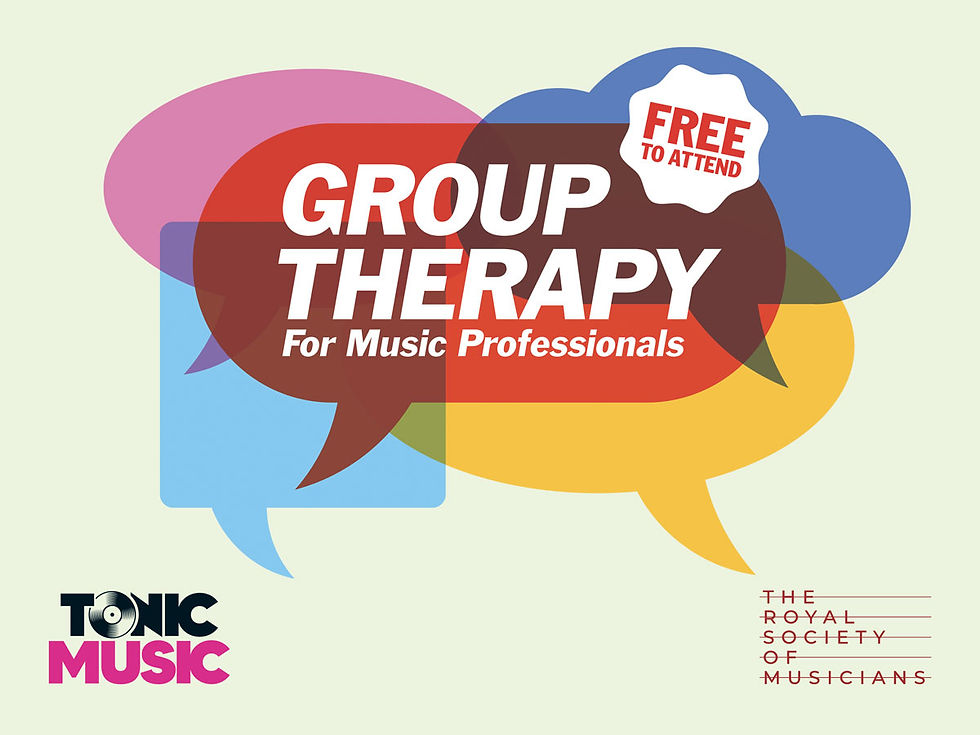
Tonic Music Group Therapy.
Now that Tonic Music has delivered several rounds of group therapy, it feels like a good time to reflect on the experience of facilitating the process.

As mentioned in previous blogs, groups in general are a key part of the Tonic world. Therapy groups in particular cultivate a space where we can explore our own inner worlds with greater depth, whilst containing this experience within a safe and supportive environment. Group therapy allows us the opportunity to notice how long-standing patterns show up both within the group and in our lives outside it. For instance, someone might worry that they’ve spoken too much or shared too openly, only to then become self-critical.
In this sense, group therapy goes further than our typical peer or psychoeducational groups. While peer spaces offer connection through shared experience as musicians, group therapy builds on this by inviting reflection, support, and gentle challenge. It encourages us not only to feel understood, but also to question and reshape the assumptions we carry about ourselves and others.
Like all of Tonic Music's group work, the musical and industry background of the facilitators also helps to build a joint understanding of the unique pressures of life in music: irregular income, late-night schedules, performance anxiety, creative burnout, and the emotional highs and lows tied to artistic identity. Essentially, one of the biggest benefits of musician-led group therapy and the peer groups is shared understanding. When everyone in the room has lived experience of gigging, touring, recording, or navigating the industry, there’s far less need to explain context. Participants can speak openly about things like performance anxiety, rejection from labels, or the isolation of long tours, without feeling misunderstood. This creates a faster, deeper sense of trust.
These groups also foster a strong sense of community and belonging. The music industry can be surprisingly isolating, even for those constantly surrounded by people. Group therapy provides a consistent space where musicians can connect beyond networking or performance and explore our struggles in the context of the group dynamics. Although there is a practical benefit from learning tailored coping tools and hearing how others cope. Topics like managing performance anxiety, balancing creative output with mental health, or handling social media pressure are addressed in ways that are directly relevant to musicians and our wounds outside of musicking.
In group therapy, old emotional wounds don’t just get talked about, they also tend to show up in real time enabling us to gently explore them further. Patterns formed in earlier relationships (like fear of rejection, people-pleasing, withdrawal, or defensiveness) can often re-emerge in how someone interacts with the group. This is sometimes called transference, where past experiences are unconsciously projected onto present relationships. In a well-facilitated group that has evolved to feel safe, these moments are viewed with curiosity rather than judgement. For example, members might notice how they feel when someone interrupts them, ignores them, or offers feedback. These reactions can potentially open a window into unresolved experiences from the past to enable us to bring them into the present.
What makes group therapy especially powerful is that these wounds can be worked through collaboratively. With guidance, members can practice expressing feelings they may have suppressed for years and receive responses that differ from what they originally experienced, sometimes referred to as a ‘corrective emotional experience’. An opportunity for something different. For example, someone who expects criticism might instead receive understanding and validation, which can gradually reshape their internal expectations of others. Over time, the group becomes a safe environment to test new ways of relating, setting boundaries, asking for support, or tolerating vulnerability, helping us to become more reflective of old wounds and making healthier patterns feel more natural outside the therapy room. This new experience is internalised, and we can carry it forward with us in new challenging situations.
All of these factors are of course far more nuanced and messier in real life but I hope this brief overview has provided some insight into how group therapy can enable us all to dig a little bit deeper into our own meaning making and perhaps challenge ourselves reflectively.
In a world where musicians are under increased stress and greater mental health difficulties, these groups offer honesty, empathy, challenge and shared growth. That combination can be incredibly powerful not just for general mental health, but for sustaining a life in the hallowed music industry.
If you feel like this experience could benefit you then please check our the groups and other support that Tonic Music offers here.

Adam Ficek hosts 'Tonic Music' a monthly show on Totally Wired Radio. Each show features Adam spinning the finest in funk, soul, beat, rock, latin, jazz, and everything in between — alongside insightful conversations with guests exploring where music meets mental health.

You can listen again to any of the previous shows via Tonic Music's Mixcloud page and also on our YouTube channel.